Retro Mimi: A Guide to the 70s-Inspired Machine Embroidery Design
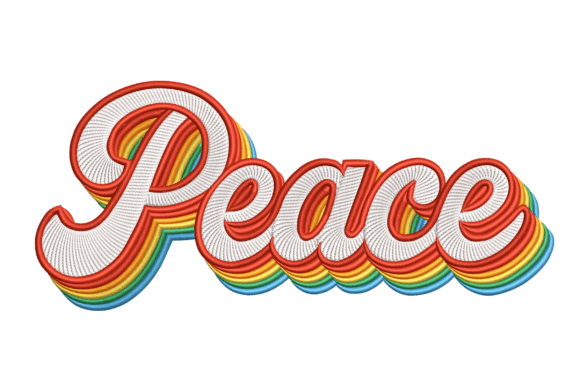
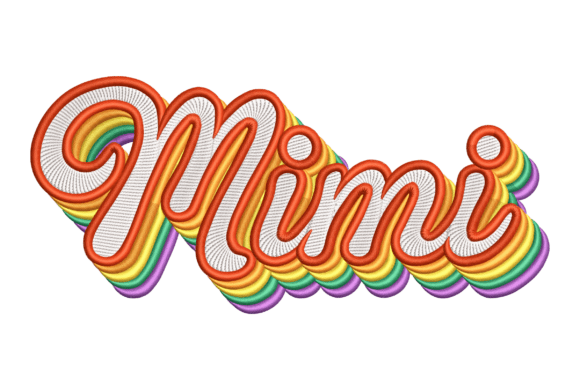
For crafters and hobbyists looking to personalize gifts with a touch of nostalgia, the Retro Mimi machine embroidery design offers a distinct aesthetic rooted in 1970s visual culture. This digital pattern is not merely a text file; it is a layered composition that utilizes a 3D stacked text effect to create depth and dimension. By placing a vibrant rainbow spectrum—spanning red, orange, yellow, green, and purple—behind crisp white script, the design achieves a groovy, high-contrast look that stands out against various fabric backgrounds. While many embroidery options exist for honoring grandmothers, understanding the specific construction and application of Retro Mimi helps buyers determine if it fits their project requirements.
The Visual Architecture of the Retro Mimi Design
The defining characteristic of the Retro Mimi pattern is its reliance on layering to simulate three-dimensionality. Unlike single-layer text designs that sit flat on the fabric, this pattern constructs a shadow-like base using multiple rows of colorful stitches. The sequence of colors mimics the warm, saturated palettes popular during the late 1960s and early 1970s. This approach creates a "pop" effect where the white script appears to float above the background, enhancing legibility even from a distance.
From a technical standpoint, the design requires precise registration. The success of the 3D effect depends on the alignment between the colored backing layers and the foreground white text. If the machine tension or hoop placement is inconsistent, the white script may shift slightly, disrupting the illusion of depth. Therefore, while the visual impact is significant, the execution demands attention to detail regarding thread tension and stabilizer choice. The use of bright, primary and secondary colors means that the design works best on neutral or dark fabrics, such as navy blue, black, or charcoal gray, where the rainbow spectrum can fully express itself without clashing with the garment's base color.
Comparing Retro Mimi to Standard Text and Floral Designs
When evaluating embroidery options for Mother's Day or birthday gifts, consumers often weigh bold typography against traditional floral motifs or delicate script styles. Traditional floral designs, often featuring roses, daisies, or vines, offer a timeless, soft aesthetic that appeals to those preferring a classic look. These patterns typically rely on gradient shading within petals and leaves to create realism. In contrast, Retro Mimi prioritizes graphic impact over realism. It is an abstract, typographic statement rather than a representational image.
Compared to standard single-color text designs, Retro Mimi involves significantly more stitch counts and thread changes. A simple "Grandma" script might use one spool of thread and take minutes to stitch. Retro Mimi, with its multi-colored stack and white overlay, requires changing threads five or six times (plus the white) and takes considerably longer to complete. For users operating commercial machines or those needing to produce large batches quickly, the time investment per unit is a trade-off to consider. However, for individual gift-givers seeking a unique, eye-catching result, the additional complexity justifies the effort.
Another category of comparison lies in the target demographic. Many grandmother-themed designs lean heavily into sentimental imagery like grandchildren's names, hearts, or family trees. While these are deeply personal, they can sometimes feel dated or overly sweet depending on the recipient's taste. The Retro Mimi design takes a different angle by focusing on style and attitude. It frames the title "Mimi" not just as a familial role, but as a fashion statement. This makes it particularly suitable for grandmothers who identify with vintage fashion, have a playful personality, or appreciate retro pop culture.
Evaluating Fabric Suitability and Project Types
The versatility of the Retro Mimi design extends across several fabric types, though performance varies based on material weight and texture. The bold nature of the 3D stack makes it an excellent candidate for medium-to-heavyweight fabrics. Tote bags made of canvas or cotton duck provide a sturdy surface that can support the density of the stitching without puckering. Similarly, sweatshirts and hoodies offer a thick nap that complements the raised texture of the embroidery.
Kitchen aprons present another strong use case. The durable cotton blends commonly used for aprons can handle the heavy stitching, and the colorful design adds a cheerful element to kitchen decor. However, caution is advised when applying this design to lightweight materials like thin t-shirts or silk blouses. The sheer volume of thread required for the rainbow stack can cause the fabric to warp or pucker, potentially compromising the structural integrity of the garment. In such cases, a lighter, single-layer alternative might be a more practical choice.
Furthermore, the choice of stabilizer is critical for maintaining the integrity of the 3D effect. Because the design relies on stacking layers, a tear-away stabilizer may not provide enough support, leading to distortion as the fabric relaxes after stitching. A cut-away stabilizer is generally recommended to ensure the white script remains perfectly aligned with the colorful base over time and through washing cycles.
Technical Considerations: File Formats and Machine Compatibility
One of the practical advantages of the Retro Mimi digital download is its availability in multiple embroidery file formats. Modern embroidery machines utilize proprietary formats ranging from .PES and .JEF to .DST and .EXP. A common frustration for hobbyists is purchasing a design only to find it incompatible with their specific brand of machine. By offering a bundle of formats, the Retro Mimi design reduces this friction, allowing users with Brother, Janome, Bernina, Singer, or Pfaff machines to utilize the pattern immediately.
However, compatibility does not guarantee identical results across all machines. Different brands handle color sequencing and jump stitches differently. Users should preview the design on their machine's software before stitching to verify that the color order matches the intended rainbow spectrum. Additionally, some older machines may struggle with the intricate underlay required for the 3D effect. In these scenarios, simplifying the design or adjusting the stitch density settings may be necessary to prevent thread breaks or skipped stitches.
Decision Factors: When to Choose Retro Mimi
Selecting the right embroidery design involves balancing aesthetic goals with practical constraints. The Retro Mimi design is the optimal choice when the goal is to create a high-impact, modern-vintage statement piece. It is particularly effective for:
- Gifts for style-conscious recipients: Grandmothers who enjoy vintage fashion or have a fun, energetic personality will likely appreciate the groovy vibe.
- Projects requiring durability: Items like tote bags and aprons benefit from the dense stitching, which holds up well to wear and tear.
- Visual differentiation: When standard floral or script designs feel too generic, the bold typography of Retro Mimi offers a unique alternative.
Conversely, there are situations where this design may not be the best fit. If the recipient prefers understated elegance or minimalism, the bright rainbow colors and stacked text may feel too loud. Additionally, if the project timeline is tight, the multiple thread changes and longer run time make Retro Mimi less efficient than simpler patterns. Finally, for very small areas where space is limited, the size of the 3D stack might overwhelm the available surface area.
Conclusion
The Retro Mimi machine embroidery design represents a specific niche within the world of textile customization. By combining nostalgic 70s aesthetics with modern 3D stitching techniques, it offers a vibrant option for celebrating grandmothers in a way that feels fresh and contemporary. While it requires more preparation and time than basic text designs, the resulting visual depth and color payoff can transform ordinary items into cherished keepsakes. Ultimately, the decision to use Retro Mimi depends on the recipient's personal style, the intended fabric, and the crafter's willingness to manage a slightly more complex stitching process. For those willing to invest the effort, the design delivers a memorable and stylish tribute.