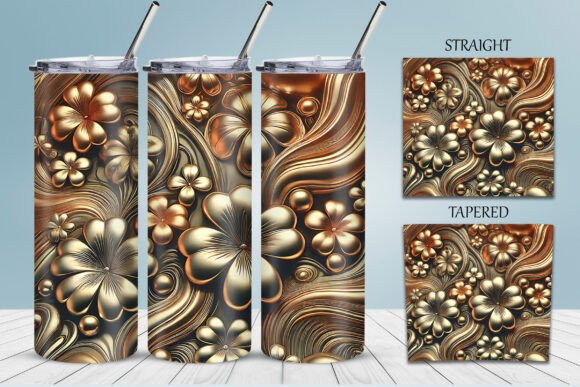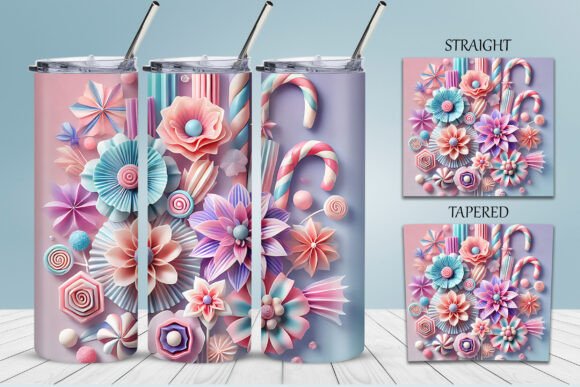
Mastering the 3D Flowers Floral Tumbler Wrap Design for Professional Sublimation Results
In the rapidly evolving world of custom drinkware, visual appeal is the primary driver of sales. The 3D Flowers Floral Tumbler Wrap Design represents a significant leap forward in aesthetic quality, moving beyond flat, two-dimensional patterns into immersive, depth-rich visuals that catch the eye. However, possessing a beautiful design file is only half the battle. Many creators, from seasoned entrepreneurs to enthusiastic hobbyists, stumble not because their equipment is faulty, but because they misunderstand the technical nuances of digital assets. This guide aims to clarify common pitfalls and provide actionable advice to ensure your final product matches the high-resolution promise of your source files.
Understanding the Digital Asset Before You Print
Before diving into the printing process, it is crucial to understand exactly what you are working with. This specific listing features a design crafted through AI generation and then meticulously edited and refined in Photoshop. This hybrid approach combines the creative unpredictability of artificial intelligence with the precision of human editing. The result is a unique, high-fidelity image that stands out in a saturated market. However, because this is a digital download, there are no physical items shipped to you. This distinction is vital for new sellers who might expect a tangible sample. Your success depends entirely on how well you interpret and apply the digital files provided.
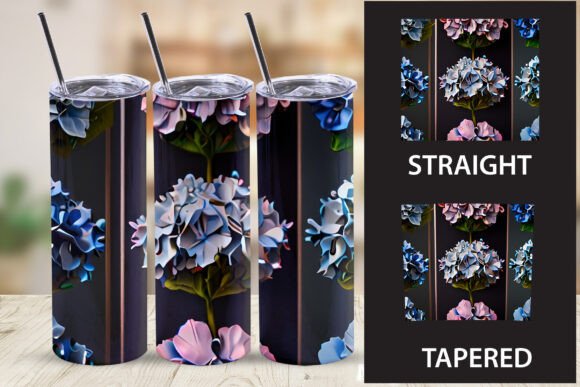
The package includes two distinct formats: one straight PNG file and one tapered PNG file. Understanding the difference between these two is the first step toward avoiding wasted materials. A straight wrap is designed for cylindrical tumblers with consistent diameter from top to bottom, while a tapered wrap accounts for the slight narrowing found in many popular tumbler styles. Using the wrong format will result in distortion, stretching, or awkward gaps in your floral pattern.
Common Mistakes That Compromise Quality
One of the most frequent errors creators make is ignoring the resolution specifications. This design is provided at 300 DPI (dots per inch) with dimensions of 9.3 × 8.2 inches (2790 × 2460 pixels). While this is considered high-resolution for sublimation, some users attempt to scale the image up significantly beyond its original size. When you enlarge a raster image like a PNG too much, you introduce pixelation. The crisp edges of the 3D flowers become blurry, and the depth effect is lost. Always keep scaling minimal. If you need a larger wrap, it is better to source a design specifically created for that dimension rather than forcing a smaller file to fit.
Another critical oversight involves color management. The listing notes that colors may vary slightly due to screen differences. This is not just a disclaimer; it is a technical reality. Monitors emit light, while printed ink absorbs it. What looks like a vibrant, neon pink on your backlit screen may print as a muted rose if your printer profile is not calibrated. Many beginners skip the step of creating test prints. They assume the digital file is the final truth. This leads to dissatisfaction when the batch of twenty tumblers does not match the proof on their monitor. To avoid this, always print a small section of the design on sublimation paper and press it onto a scrap piece of coated material to check color accuracy before committing to full production runs.
Navigating the AI-Generated Nature of the Design
Since this artwork is AI-generated, it comes with a unique set of considerations. The seller states that any similarities to copyrighted material are coincidental and can be removed upon request. For professional marketers and small business owners, this highlights the importance of due diligence. While the risk is low, it is wise to perform a reverse image search or consult with a legal expert if you plan to use the design for large-scale commercial branding. Furthermore, AI art can sometimes contain subtle artifacts or inconsistencies in the floral anatomy—such as petals merging unnaturally or stems disappearing. Because this file was refined in Photoshop, many of these issues have likely been corrected, but a final visual inspection is still recommended. Zoom in to 100% and scan the image for any glitches that might look strange when printed on a curved surface.
A common misunderstanding is assuming that "AI-generated" means "low effort." In reality, the meticulous editing in Photoshop adds significant value. It ensures that the seams align correctly and that the 3D effect is consistent across the wrap. However, users must still handle the file with care. Avoid saving the PNG as a JPEG repeatedly, as this introduces compression artifacts that degrade the smooth gradients essential for the 3D illusion. Keep your master file safe and work from copies.
Practical Steps for Optimal Application
To maximize the impact of the 3D Flowers Floral Tumbler Wrap Design, follow these practical steps:
- Verify Your Tumbler Type: Measure your blank tumbler accurately. Determine if it is straight or tapered. Select the corresponding PNG file from your download. Do not try to stretch a straight wrap onto a tapered cup without adjusting the design in software, as this will distort the flowers.
- Check Printer Settings: Ensure your sublimation printer is set to high-quality photo mode. Use genuine sublimation ink and high-quality sublimation paper. Standard inkjet paper will not release the dye properly, resulting in faint, washed-out colors.
- Calibrate Your Heat Press: Temperature and time are critical. Follow the manufacturer’s recommendations for your specific tumbler brand. Over-pressing can cause yellowing, which ruins the delicate pastel tones often found in floral designs. Under-pressing leads to ghosting and poor color transfer.
- Inspect the Final Product: After pressing, allow the tumbler to cool completely before removing the paper. Check for any white spots or uneven coverage. These are usually signs of uneven pressure or debris on the tumbler surface, not flaws in the digital design.
Making an Informed Decision
When evaluating whether this design fits your brand, consider your target audience. The 3D floral aesthetic appeals to consumers looking for elegance and modernity. It is particularly effective for spring collections, wedding favors, or boutique gift shops. However, if your brand identity is strictly minimalist or industrial, this intricate design might clash. Always align your design choices with your broader marketing strategy.
Remember that mockups and photos shown in listings are for demonstration purposes only. They often feature ideal lighting and perfect angles. Your real-world results will depend on your skill, equipment, and environment. Do not be discouraged if your first attempt is not perfect. Sublimation is a craft that improves with practice. Use this high-quality asset as a tool to refine your technique. By paying attention to detail, respecting the file specifications, and understanding the limitations of digital-to-physical translation, you can produce stunning tumblers that stand out in a crowded marketplace. The key is not just buying the design, but mastering the process that brings it to life.